Suggestion: put this on and do your thing.
Good fretting-about tunes.
No cans required.
No rights, homage.

Suggestion: put this on and do your thing.
Good fretting-about tunes.
No cans required.
No rights, homage.
Cool.
Just so cool.
Dig it.
The right song for a dexterous night
And for one I think of.
No rights:homage
A diabolical combo.
These are are two of my favorite…
Dig.
Used for good, clean energy boosts.
No rights: homage.
No rights: pure homage.
A gent friend introduced me to their music a year ago or so.
Do it yourself.
Instantly endeared them to me.
Such a unique, sound from an innovative guy.
Original.
Looks good in denim overalls too .
I look forward to digging into them more.
No rights, just homage.
Peel Sessions stay on point.
This one is top form.
The bass line and where it sits in the mix. Nice and crisp.
The room sounds spacey.
Music does not consist in those purely intellectual oscillations and figurations which we have abstracted from it.
Its pleasure consists in its sensuous character.
In the outpouring of breath.
In the beating of time.
Certainly, the spirit is the main thing.
The invention of new instruments,
altering old ones.
The introduction of new keys.
New rules, taboos, regarding construction and harmony, are always mere gestures and superficialities, as our the fashions of nations.
-Hermann Hesse
No rights, homage.
A 4th of July howl from southern class act punks.
No rights, homage
Triphop flashback,
Trendy Wendy.
I take a small step….
People call me Tricky for a particular reason…
Now whose got the micro-phone?
The poetics of “defamiliarization”
Representing something in such a way that one feels as if one were seeing it for the first time, thus making the perception of the object difficult for the reader.
“Ratios of revision”
“Nonextraneity of structure in art.”
extraneous: irrelevant or unrelated to the subject/of external origin (Concise OED, 2008)
Structure of words in a poem/story become art in that they are a looking-glass house, a skeleton key, a scaffold.
An example of the aesthetics of structure creating art in unexpected places. Like the table of contents of a book on aesthetics.
Luigi Pareyson’s Aesthetics (Milan: Bompiani, 1988)
Section 3 of Chapter 3 is titled: “The parts of the Whole”
Chapter 3 is titled: “Completeness of the work of art”
subsection 10 of Chapter 3 Section 3 is entitled: “The essential nature of each part: structure, stopgaps, imperfections.
“In this sense the relation that the parts have among themselves do nothing but reflect the relation that each part has with the whole: the harmony of the parts forms the whole because the whole forms their unity.“
As regards “stopgaps in literature”:
“It can be a banal opening, which can be useful for finding a sublime ending.”
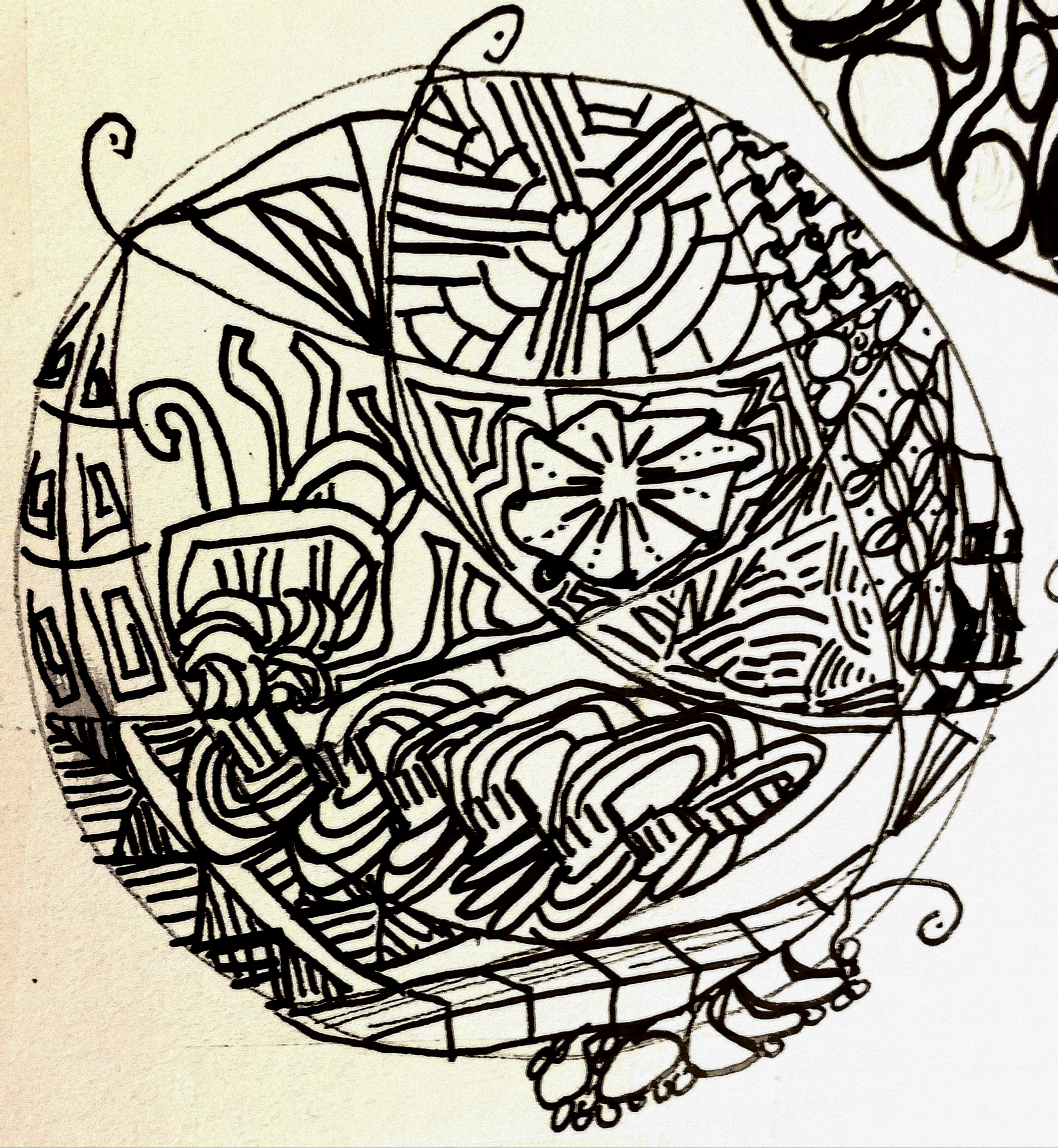
No rights, just homage.
I howl for stripped down classics and supergroups.
Good jams for toast.
As is a practice, I flipped through a book snapped from the shelf at random.
There was a metro ticket from a trip taken.
It fell before the start of this reading.
It fell at the end of the other reading included.
As an investigator of method, Tao, mysticism, I found it of interest. Surprise, right? Giggle.
A couple of extra quotes from different readings included below.
The gate keeper in the capital city of Sung became such an expert mourner after his father’s death, and so emaciated himself with fasts and austerities, that he was promoted to high rank in order that he might serve as a model of ritual observance.
As a result of this, his imitators so deprived themselves that half of them died. The others were not promoted.
The purpose of a fish trap is to catch fish, and when the fish are caught, the trap is forgotten.
The purpose of the rabbit snare is to catch rabbits. When the rabbits are caught, the snare is forgotten.
The purpose of words is to convey ideas. When the ideas are grasped, the words are forgotten.
Where can I find a man who forgotten words? He is the one I would like to talk to.
[xxvi. 11.]
Hui Tzu said to Chuang Tzu:
“All your teaching is centered on what has no use.”
Chuang replied:
“If you have no appreciation for what has no use
You cannot begin to talk about what can be used.
The earth, for example, is broad and vast
But of all this expanse a man uses only a few inches
Upon which he happens to be standing.
Now suppose you suddenly take away
All that he is not actually using
So that, all around his feet a gulf
Yawns, and he stands in the Void,
With nowhere solid except right under
each foot:
How long will be he able to use what he is using?”
Hui Tzu said:
“It would cease to serve any purpose.”
Chuang Tzu concluded:
“This shows
The absolute necessity
Of what has ‘no use.'”
[xxvi. 7.]
The disciple got some supplies,
Traveled seven days and seven nights
Alone,
And came to Lao Tzu.
Lao asked: “Do you come from Keng?”
“Yes,” replied the student.
“Who are all those people you have
brought with you?”
The disciple whirled around to look.
Nobody there. Panic!
Lao said: “Don’t you understand?”
The disciple hung his head. Confusion!
Then a sigh. “Alas, I have forgotten my
answer.”
(More confusion!) “I have also forgotten
my question.”
Lao said: “What are you trying to say?”
The disciple: “When I don’t know,
people treat me like a fool.
When I do know, the knowledge gets me in trouble.
When I fail to do good, I hurt others.
When I do good, I hurt myself.
If I avoid my duty, I am remise,
But if I do it, I am ruined.
How can I get out of these contradictions?
That is what I came to ask you.”
Lao Tzu said: You are trying to sound
The middle of the ocean
With a six foot pole…
You have got lost, and are trying
To find your way back
To your own true self.
You find nothing
But illegible signposts
Pointing in all directions…
If your obstructions
Are on the outside,
Do not attempt
To grasp them one by one
And thrust them away.
Impossible! Learn
To ignore them.
If they are within yourself,
You cannot destroy them piecemeal,
But you can refuse
To let them take effect.
If they are both inside and outside,
Do not try
To hold on to Tao–
Just hope that Tao
Will keep hold of you.”
The disciple asked:
“Is this perfection?”
Lao replied: “Not at all. If you persist in trying
To attain what is never attained
(It is Tao’s gift!)
If you persist in reasonsing
About what cannot be understood,
You will be destroyed
By the very thing you seek.
To know when to stop
To know when you can get no further
By your own action,
this is the right beginning!”
[xxiii. 3-7]
Merton, Thomas. The Way of Chuang Tzu. Shambhala Publications, Inc. Boston & London. 1992.
Copyright 1965 by the Abbey of Gethsemani
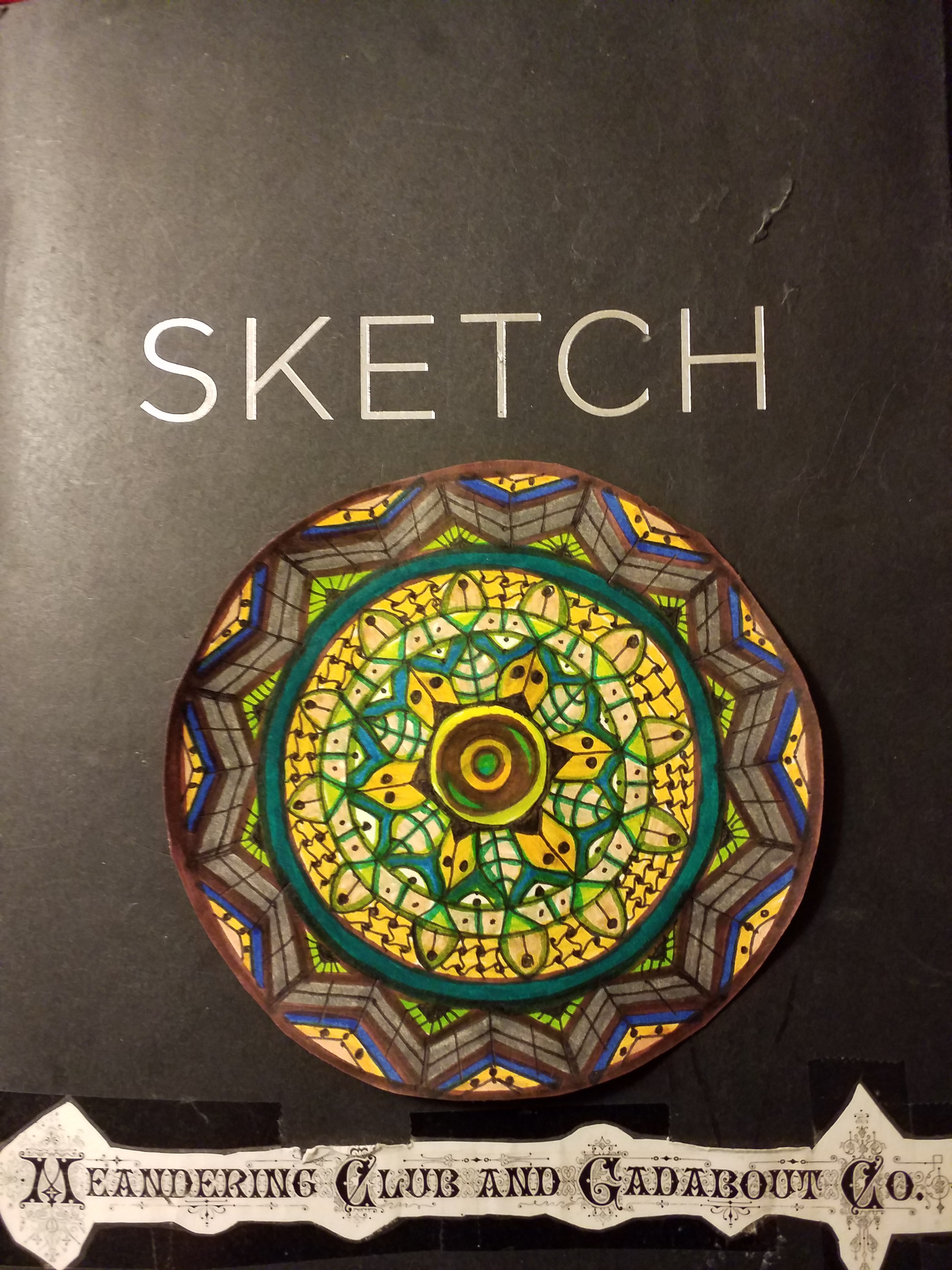
No rights, pure homage to N’Awlins standard.
Punkish for them. Great production on this album. Remastered not too long ago.
Sounds like a PJ Harvey joint.
A childhood fave of mind.
“Daymare,” I say.
“Oh, you mean like what happens and what you see when you are awake?” the blonde asks.
I open my mouth to speak, but catch myself in time to shut it.
A quick grin.
Lips part, mouth reopens, tongue helps the organ say:
“That’s heady,” I say.
“You should see my nightmares.”
That’s, literally, what she said.
No rights; pure homage.
Dig the JBE
Great music to listen to while creating stuff .
“Everything that had belonged to me in these earlier years of my life went from me and became alien and lost to me. I suddenly saw how sad and artificial my life had been during this period. For the loves, friends, habits, and pleasures of these years were discarded like badly fitting clothes. I parted from the without pain and all that remained was to wonder that I could have endured them so long.”
“The lives of ordinary people can be boring, but the activities and destinies of idlers are interesting…I remained apart from ordinary life.”
“I was overwhelmed by an astonishing feeling of happiness, for I suddenly knew what love was. It was not a new feeling but a clarification and confirmation of old premonitions, a return to native country.”
“The most lively young people become the best old people; not the ‘wise’ ones from school.”
“I can’t live and I can’t die. Everything seems meaningless and stupid.”



 WrittenCasey