Skech, Inc. [Sic]

PRODUCED BY-A Meandering Club & Gad About Co.

[AMC&GAC]

A Division of Grim Shadowy Form
A Limited Liability Company
[GSF,LLC]

__________________________________________

“No, Meg, don’t hope it was a dream. I don’t understand it anymore than you do. But one thing I have learned is that you don’t have to understand things for them to be…..”

The art of prose exists because the words are not objects but designations for objects.

Prose is an attitude of mind.

Beauty hides in a book; It acts by persuasion like the charm of a voice or a face. It does not coerce; it inclines a person without his suspecting it, and he thinks that he is yielding to arguments when he is really being solicited by a charm he does not see.

The dead are there [in the library]; The only thing they have done is write. They’ve long since been washed clean of the sin of living and their lives are known only through books which other dead men have written about them.

In one sense, it is a possession; The reader lends himself to the dead in order that they might come back to life.

In another sense, it is contact with the beyond.

Literature and Existentialism, Jean-Paul Sartre


…………gather round the children and elders, as I will tell a tale of Once, Back When We All Lived In The Forest…….

The tale is nothing, if not novel and authentic. I readily admit the probable likelihood of disputes issuing forth once I’ve told my unheard tale.

You’ll say that you have heard this one from somewhere before.

The sensation persuading you to disbelieve me is itself the evidence that I advance in support of the validity of the two assertions I aver of my tale-it is untold and authentic.

For, do you not know that all tales of, Once, When We All Lived In The Forest, are the same tale being told anew in novel forms. The stories endure existence because we never stop wanting to hear them. We never stop wanting to hear them because we’ve always heard them. But, it is not in the way we hear phones ring, cars alarm,or birds chirp.

The sound of a story is the sound of one’s own pulse. Can you really conceive of the sound that your pulse makes? I experience my pulse, more than I hear it-although it certainly is audible. After physical exertion, I hear it loudly, sometimes, even ringing in my ears until my heartbeat begins to still. Fear, complete quiet, and stillness make my own pulse sound the loudest.

The sound of my pulse goes unnoticed by my awareness most of the time. I presume this results from my awareness having been exposed to the constant, continuing sound of my pulse during every single moment of my existence.

Eventually, my brain said, “Enough! Let’s just tune that one out. We’ve got more stimuli in this very second than the sense facilities of this meat bag could ever experience, let just go ahead and not waste energy on perceiving the pulse. That sound will continue until the meat bag dies. I know avoiding death is sort of what my job here is all about, but we don’t need to monitor for the sound of the pulse. With pulse, I’m willing to go on the honor system. Besides, if I always listen for the pulse and the pulse is always audible until ceasing at death, I will never hear it cease because its cessation is the end of my ability to hear. “

So it is with story. The ‘me,”myself,’ and, ‘I’ (used when a self references its own self hood) exist because humans have story as a sense organ. The organ differentiates humans from other mammals.

The story organ creates a self out of the development of a homo sapien. What human can be said to not have self-hood?

What is a self and how is it by which some organisms and not others come to possess self hood? Is it possible to possess self hood but have no awareness of your own self?

“The irony and obsessions of Cioran’s philosophy” (Marius Nica)………a new name to me.

https://wp.me/p1gja9-3Na

Cheers to the author for this work.

Such an interesting and thoughtful piece on a writer and thinker.

The author discusses Romanian contemplator Emil Cioran and his relationship to atheism, skepticism, and mysticism.


Favorite quote from the author of this paper:

…..then that person has not really read Cioran. Perhaps they have leafed through some pages, read some ideas which they mirrored their own experiences into, their own projections on an existence which is impossible to transcend.

Favorite Cioran quotes included in this work:

If the difference between man and animal is the fact that the animal cannot be but animal, whereas the man can be inhuman, which is something other than himself-in this case I am unhuman.

My experiences became books, as if they had written themselves.

The writing is only valuable when it objectifies a feeling, because beyond the expression there is life, and beyond the form there is content.

Between the passion for ecstacy and the horror of the void the entire mysticism revolves.

Идіотъ The Idiot…remarks from an idiot

Fyodor Dostoevsky, as this gal understands, is no fool.

I read The Idiot in highschool, for personal ed as opposed to curriculum and yes, it was because I wanted to impress myself by reading Russian lit unguided. And yes, referencing this on AP exams 15 yrs ago was conducive to high scores.

However, I was spared the light~gel of literary criticism in my reading of The Idiot.

It was only later I heard I heard this novel was widely allegeded to be a mere allegory for Christ.

Screw that. Dostoevsky knew better.

So did Augustine.

See it and them another way.

Watch “Ike & Tina Turner – Proud Mary | 1971” on YouTube

Do not own rights, just paying mad homage.

Many have done Proud Mary but few compare to this reinterpretation.

Creole delta blues babe!

Alice Ladder’s Piece

Breathe and Walk (or stand on your toes)

This book has some great practices and impressive English translation of some very complex abstractions. Apply the 4 breaths while walking and see.

Also, if you stand on your toes long enough and pretend to be a dancer perhaps the body obliges. Power of imagination, discipline, and repetition.

If you think that’s weak. See what you calf muscles start doing after a week of this practices.

Exploring barre for stretching.

A wise man once said…

In his Honor Thesis, James Joseph Black wrote, “the young have read little and compared less.  Stringency is not their forte.”

Black, James Joseph, “Hesse and the Hippies: The Sociology of a Literory Phenomenon” (1990). Honors Theses. Paper 232

DaemonsDiabolusDervish (fictiony/early days)

Anon, Anon Dear Reader (readers render) delighted to find you still looking at my letter/s, my Epistle.


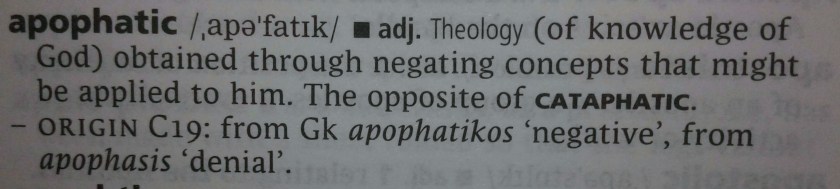
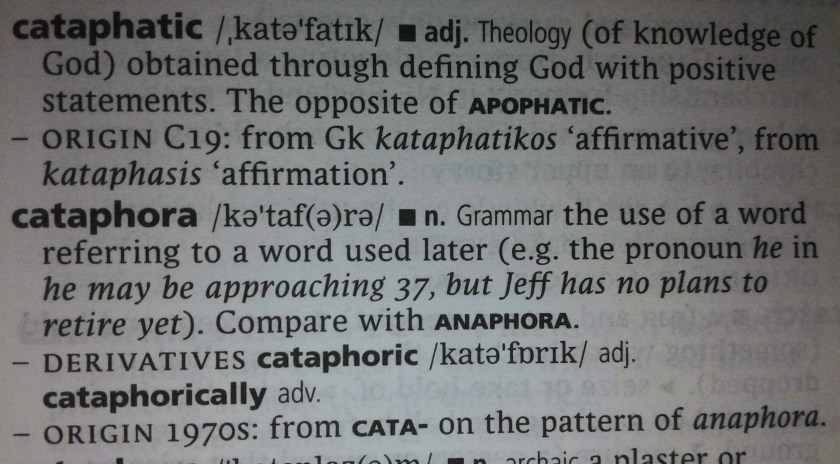
For this now, let’s simply concern ourselves with what in the world is meant by the word diabolus in the passage below*


“Other centuries sought safety in the union of reason and religion, research and asceticism.  In their Universitas Litterarum, theology ruled.  Among us we use meditation, the fine gradations of yoga technique, in our efforts to exorcise the beast within us and the diabolus dwelling in every branch of knowledge…[The] Glass Bead Game also has its hidden diabolus, that it can lead to empty virtuosity, to artistic vanity, to self-advancement, to the seeking of power over others and then to the abuse of that power.  This is why we need another kind of education beside the intellectual and submit ourselves to the morality of the Order, not in order to reshape our mentally active life into a psychically vegetative dream-life, but on the contrary to make ourselves fit for the summit of intellectual achievement. We do not intend to flee from the vita activa to the vita contemplativa, nor vice versa, but to keep moving forward while alternating between the two, being at home in both, partaking of both.” 1

Hesse, Hermann 1990 The Glass Bead Game: (Magister Ludi). New York: H. Holt pg. 237


One devil is the “beast within us”

The other devil (the ‘hidden’ one) is “dwelling in every branch of knowledge.”  This sounds like the The Devil who is in the details.  Where are branches of knowledge located?  In our minds? In the system of interactions occurring in our brains?  In the ether? In consciousness? Is this the same beast slithering in the branches of the forbidden Tree of Knowledge who met Adam and Eve in the Garden?


Upon eating from the Tree of Knowledge, did Adam and Eve gain nothing more than “empty virtuosity” or “artistic vanity” or the desire to possess and subsequently wield power?


Hesse says this “required a new type of education”  One that moved forward in both vita activa and vita contemplativa. We should be forever alternating between the two.  Instead of engaging in a binary opposition. The tension emerges from the dialectic theory and practice of weighing and reconciling juxtaposed or contradictory arguments for the purpose of arriving at truth especially through discussion and debate. This emerging tension should be the object of our inquiry.


Which side of a coin is really heads and which side is really tails?  That is a meaningless question.


In order to determine which face was Janus’ true face, shall we pit one face against the other in a death battle.  The surviving face must be the true face of Janus. (?) Well that is a dumb idea because there is one body serving two faces.  If the faces each could have their own brain, they would be in competition for control over the same two arms and legs. He would be injuring his own limbs in his effort to destroy the ‘wrong’ face.  Could such a fight even occur?


Knowledge is not necessarily knowing.  Knowledge only exists if there is a knower, right? I contend that there is only one meaningful way to use the word “Knowledge”: I know knowledge.


Consider the following:


“Many years ago, It was common knowledge that the Earth was flat.  Presently, it is common knowledge that the Earth is not flat. What was common knowledge many years ago disagrees with what is common knowledge today.”  


Is it true that the Earth is an orb?  I suppose it depends on who you ask, or to be more specific, when you ask.  


If you asked a common man many years ago, “Is it true that the Earth is flat.”  He would probably affirm that statement.  


If you asked someone today, “Is it true that the Earth is flat?”  She would probably say, “What? Of course not, they figured out that was incorrect a long time ago.  The Earth is round.”


So, does that mean that the people many years ago-who believed it to be common knowledge that the Earth is flat-were being untruthful?  Were they lying when they said it was true that the Earth was flat?


No-they just did not know their existing knowledge was delusion; anyone can have knowledge of (x).


Knowledge can’t be truly possessed in a tangible way; being able to transplant the eternal, energetic potential of verb-forms into the dirt of the transient, physical world of everyday life is no trick. lt is magic and it is also alchemy: as four fundamental processes can transmutate the eternal matter of a verb into a noun – a thing, person or place. Miraculous.


But, let’s consider 2 nouns: theChurch and theKnowledge, both nouns and both words of power, but the vibrations and reverberations resonate conscientiously when the etymology of theWord is paid proper libation prior to using theWord.of


Take theWord and theChurch. In my Tribe, aChurch is a place (noun). Sure they ofChurch sojourn to make Church a SacredPlace; and, yes, you, AngryScientist/S (ASS), I understand that the actions of aChurch make you feel all funny inside. It’s scary when your insides act weird. It is also confusing when someone rattles the bars of your howler monkey cage. Confusing b/c your monkey howls as a pig squeals-really GD loud&screeching. Confusing because why is someone trying to mess with your dumb monkey anyway? You didn’t do sh1te to theChurch monkeys……yep..mmh… you didn’t start the monkey cage-shake heard round the world.


Hey! A.S.S. zip it & find your seats again – we’ll get to this grievance later.


In the Battle of the Word/s above -theChurch beats theKnowledge for better conjurgation and for careful symbolic construction: an adept found time and resources to draft blueprints for theConstruction of theChurch, a holy man being sought to lead the emergent micro-community sojourningItself-into-existence by its own bootstraps. The edification of 1 noun,  theChurch, is made real in the transient, physical domain as soon as construction is completed.


thePathÖtheReligios, say whatever else you wilt, but I readily acknowledge Impeccability/n’ Word to theChurch, and to hell with however apologetic that ASS, as well as his, “less zealously” inclined contemporaries think I should be for endeavoring to speak about Affairs/ÖAcademia in such a seedy establishment as Church: filled with all sorts of monkey-cage shaking, ignorant WhiteTrash and/or unreasonable, irrational people who (infuriatingly) refuse to acknowledge Logical Positivism.


No?! You don’t know what LP is? Well, color-me-shucked & shocked. Bless their hearts, Religioso and Academia (both oh so concerned with their super-deep and super-meaningful, self-proclaimed quests: to abide in love, compassion, and dispassionate reason in order to transcend to a higher understanding about our world) don’t feel guilty for not having actually deeply investigated all the axioms that hold your worldview together. Yeah, it turns out there’s more to it than being able to list the steps in the scientific method. But trust us, we’ve seen how hard you are trying these days. One person holding 2 screens that pump information at your eyeballs.


Ahem-what was I talking about?


You cannot have knowledge, but you can Know knowledge.  I see no apparent disingenuous intent in the initial assertion that the Earth was flat.  My thought being that maybe there were no alternative propositions competing with the idea of a flat Earth.  In fact, the idea of flat Earth was possessed by man unawares. It informed his reality but did so without his awareness. The possibility of an alternative did not yet exist, had not been considered.  


Let us stop for a moment, and examine our basic object of inquiry in the scenario above-Earth


If there is one thing public education taught me about writing it is this—–if you begin your paper with “Webster’s Dictionary defines [insert object of study here] as [copy the definition verbatim from the dictionary here]”  you are a good writer. All textbooks say that doing this is a credible way to introduce your topic.


Merrium-Webster’s Unabridged defines the planet Earth as………


Okay, so Merrium-Webster’s Unabridged defines earth.


And abruptly, I now find myself stumbling through

a particular region of the world; Or else in

areas of land uncovered by water; or else in

the sphere of mortal life comprising the world with its lands and seas as distinguished from spheres of spirit life; Or else in

the fragmental material composing part of the surface of the globe


And finally, now at last, in the fifth core sense of earth, Merrium-Webster’s Unabridged defines earth as “ [a word] often capitalized : the planet upon which we live and which being about 93 million miles from the sun is the third in order of distance from the sun and which having a diameter at the equator of 7927 miles is the fifth in size among the planets — see PLANET table.


So, my object of inquiry is the planet Earth: specifically, the often-capitalized, proper-noun status, fifth core sense of earth laid out by Merrium-Webster’s Unabridged.


When did my object of inquiry come into existence?


Since the Copernican revolution of the 16th century, thinkers have regarded Earth as a planet like the others of the solar system. First, some Polish astronomer, Nicolaus Copernicus, proposes a Sun-centered model of the universe, next concurrent sea voyages begin providing proof that Earth is a globe, and lastly, some dude called Galileo goes and not only invents technology that allows him to peer far, far into the night sky, but also develops said technology into a physical telescope which he proceeds to look into, only to find himself seeing various other planets that appeared to be globes as well.


Wait, wait, wait, wait.  


Did I just say that the Earth came into existence in the 16 the century? Because, that does not sound right. The Earth has been around for….a long time.  My college professor James Bindon once told us, in class, that if you compress the amount of time the earth has existed (according the geological record) into a 12 month period of time, then humans would not have arrived at the global shindig until sometime after early morning on New Year’s Eve.  


To say that the planet Earth came into existence in the sixteenth century obviously feel to me to be resoundingly untrue and ridiculous.  


If someone told you that she had just today learned that the planet Earth came into existence in the sixteenth century, it does not seem unfair to imagine that you would be filled with confusion, disbelief, or think she was joking; because, surely no one would be avowing the verity of such a glaring and gross fallacy.  


I will.  I rebuke that assessment with great prejudice and here is why—-the diabolus of this conundrum does not dwell within my object of inquiry laid out above; this elusive diabolus dwells in the details-like those very long paragraphs of little, teeny-tiny words found at the bottom of the TV frame during commercials for car-sales events or pharmaceutical ads. This hidden diabolus whispers into my ear words and sentences filled with such axiomatic-like insistence that eventually I come to recite them all on my own. Constantly and involuntarily, in the manner of my heart’s beat and my eyelids’ blink, I catch myself silently singing the song of “all things are either true or not, right or incorrect, existence occurs in a void, you exist in that void too, that void is created by external boundaries which you will never surmount. There are truths about the things existing in the void with you, but they are knowable only from the other side of the walls which bind you within the void.”


My object of study-the planet Earth-(which I lay out with concise and explicit exposition above) is neither real nor unnatural, true nor false.


Here is how showing is different from saying.   
 

Photoing the egret 

Whoa !

Word Introduction

Here is citation info for my sources. We can try to work on our words, but the words work on us too, largely without our awareness. So, here are some words that intrigue me: these are words I want to let ‘work on me.’

Here is citation info for my sources.

We can try to work on our words, but the words work on us too, largely without our awareness.

So, here are some words that intrigue me: these are words I want to let ‘work on me.’

Complete & Consistent 

wp-1486294468194.jpgHow familiar are you with nostalpogy?

Not at all?  Yeah, me neither.

it does not exist (at least to my knowledge as of 10 FEB 2017).  So, whatever it is that nosalpogy represents, it is something of which I cannot conceptualize.  Moreover, I’m incapable of conceptualizing it.  If no person can elucidate what nosalpogy is , if no one can help me see ‘it’ against the setting of everything else, then nosalpogy is nothing.


Get thinking about Russell & Whitehead’s attempt to derive all of mathematics from purely logical axioms and remember how Godel’s Sentence G (just one example).

Russell & Whitehead wanted to irrefutably prove that a consistent system based on a few simple assumptions (aka axioms), whose theorems can be listed by an effective procedure (i.e., an algorithm), is capable of proving all truths about the arithmetic of the natural numbers.

Well, they failed to achieve that goal, but that failure brought its own success and furthered theoretical mathematics. Godel demonstrated, for any such formal system, such as the proposed one of Russell & Whitehead,  there will always be statements about the natural numbers that are true, but that are unprovable within the system. Godel then provided proof that the system cannot demonstrate its own consistency.

wp-1486294560776.jpg

To give the gist without the jargon– I imagine a  tube with 3 tennis balls inside.  Now, imagine you have 3 box each filled with 10 of these tubes, each containing three balls.  Each tube contains a set of three balls.  Each box contains a set of 10 tubes; another way to say this is, each box contains a set of 30 balls.  So a set of 3 boxes is a set of 90 balls or a set of 30 tubes.

Imagine I am shipping out boxes of tennis balls.  On each shipping pallatte, a set of 4 boxes, each containing three boxes of tennis balls, can be packed  That means a pallatte contains a set of 360 tennis balls which is equal to a set of 90 tubes which is equal to a set of of 12 boxes.  The pallatte can also hold a set of 4 boxes each holding 3 boxes.

The point is, I can define a set of tennis balls many ways.  I can also imagine a set of sets of tennis balls (a box = 10 tubes and 10 tubes = 30 balls).  A box is a set of tubes and a set of tubes is a set of tennis balls.

So if I can imagine of box of tubes containing tennis balls; and, if I can imagine a box that contains several boxes of tubes of tennis balls, and so on…at what point do hit the top?  At what point do I reach the highest possible set?  Never.  I can always conceive of one more box around boxes just as I cannot name the highest number-I can always imagine one more.

Apologies-work in progress-researching underway.

Being in society

wp-1486294479992.jpg

Being a member of society requires behaving in specific ways and performing specific actions. By doing so, you and I reaffirm not only, that our society actually exists, but also, that you and I (the individual entities) belong to this society. As members of society, we also do certain things that exclude other individuals. Now, this may read as more antagonistic or cynical than I intend. Ultimately, it is the excluding and ‘othering process’ that validates a culture’s solidarity and solidarity is a necessary condition for the existence of the social phenomena.

THE CONTEXT OF THIS DISCUSSION IS EVERYTHING, AND THE PRESENTED ARGUMENTS SHOULD NOT BE SEEN AS SUPPORT FOR ANY GROUP OR ETHOS THAT PROMOTES THE EXCLUSION OF OTHERS. DIFFERENT DOES NOT EQUAL WRONG OR VIOLENT. IN FACT, THE MORE EXPOSURE TO OTHERS YOU EXPERIENCE, THE MORE YOU COME TO KNOW YOURSELF AND THE MORE YOU ENRICH YOUR CREATIVITY.
To know your society, you must know what is not your society.
Has anyone ever asked you what something was or what something was like or how it could be best described?
And, did you ever hear yourself say, “it would probably be easier to tell you what this what not!.”

Empathizer: So, I know what a hipster is, but what is a shoe-gazing, bird watcher?
Whiner: He’s not your stereotypical hipster douche wearing a lady’s scarf and a sports coat over torn jeans and t-shirts. He’s not an arty, magic realist steam punk kinda of hipster either.
Empathizer: Ooh Ooh, is it that heavy set hipster guy that has unruly hair and full mustache, beard, and neck beard? You know, the ones that wear the light blue denim jacket that was his grandfather’s and a pair of navy jeans that have been steam ironed, with some arty (but mostly comic strip looking) ironic T-shirt. Like a bright yellow shirt that has “you’re brilliant at everything you never tried” embossed over the knitted applique of a beret-wearing, cigarette smoking, French Mongoose standing in front of the Eiffel Tower?
Whiner: Oh oh, almost, but this kind of hipster is not fat, he’s usually real lanky, always wears white t-shirts like he doesn’t care, but he still spends just as long as the sorority girl does to get ready to go out on the town. Can grow, like, a five o’clock shadow but barely muster a lady’s mustachio- like, we’re talking early menopausal mustache fuzz at best here.

wp-1486294446563.jpg

Now that I imagine ‘not good,’ (or now that I can imagine what is not a shoe-gazing, bird watching hipster) I find myself with pieces comprising the concept ‘good’-good & not good.
Why must I include ‘not good’ in my conception of ‘good’? Because, it is only by virtue of the existence of things that are not ‘good, by which I can conceptualize ‘good.’ If there is nothing that is not ‘good’; if everything is ‘good’, why would I need the concept ‘good’ at all? Could a concept ‘good’ even exist in those circumstances?
“Bad’ is simply the negation of ‘good.’ If I know if something is ‘good,” I know if something is “not good.’ I know this concept is meaningful, because other members of my culture agree and see the differences too. Because we agree that things can be described as ‘good’ we express meaning when we talk to one other about ‘good’ things. We communicate information and understand.
So, we can take a step further and say
Bad = Not Good
Good = Not Bad
Or, on a larger scale, we could imagine:
GOOD = good + not good GOOD=bad + not bad
BAD = good + not good BAD = good + not good
The words in capital letters represent that entire meaningful content (epiphenomenon)connoted by the concept of ‘good’ and ‘bad.’ The words in lowercase letters represent the pieces of that totality that is represented by the capitalized words. So from ‘good’ we can produce two concepts: good and bad. Each term meanings requires the existence of what the other term represents.


“That was good!”
“What does ‘good’ mean?”

I could try to describe it to the inquirer by describing times and things that are good, but that means that I can imagine things and times that are not good. By remembering the variation in emotional reaction to ‘good’ or ‘bad’ stimuli, I am able to ‘decide’ if something is ‘good’ or ‘bad.’ I am also able to understand, through metaphor and simile, what others mean when they describe something as good.
But such a black and white, either/or, mutually exclusive, definition of the terms, ‘good’ and ‘bad’ can only exist in the abstract, intangible form, at the collective or social level. We, as actual individuals, not abstract, averaged, idealized hypotheticals, cannot define the terms so concretely. Whereas society may only see in black and white, we atoms of a society, at the very least and to varying degrees, see some grey in between.

So, what makes a concept meaningful things carrying encoded information to some audience? The thing being expressed must be a thing/experience/etc recognized by the audience. It must be something the audience can point out in contrast to those things that are not the same thing. So meaning requires knowing what is and is not the knowledge in questions’s object. To know what ‘fat’ is I can show you fat and not-fat in way that you identify as typical or true.

So a concept is composed of those things that is and those thing from which it is distinguishable.

So then, does that mean that meaningful concepts refer to the total of everything that is ‘that thing’ and everything that is ‘not that thing?” No. For a concept to be meaningful, it is the degree and variance in tension of those things that are and those things that are not the concept which bestows meaning on any given concept.

When you name something as a good thing, my consciousness relies on the tension of good versus not good in order to infer your intended meaning. The meaning produced is greater than the sum of its parts. A concept we consider meaningful is not simply the total of what it is and what it is not. If I understand your intended meaning, it is because the code you used to express meaning (the word ‘good’ in this instance) resonates with the tension maintaining my understanding of the concept good. That tension exists by virtue of my ability to distinguish between other instances of things I believe to be good and not good.

Embedded Levels of Discourse

wp-1486290683611.jpg

   Academia could stand to reconsider their current terminology or at the least review and reexamine the terms in usage.   


Each sub-discipline has its own lexicon of jargon.  The technical terms of each sub-discipline are used to reference ethereal, only vaguely defined “things” whose empirical reality is sometimes questionable. Just because we cannot prove something exists with the scientific method, we do not “prove” that the thing or our hypothesis is not real or incorrect.  Put another way- I decide to scientifically test the hypothesis that God is a real, existent entity, phenomenon or some variation thereof.  I can start with “primary sources” like the Bible, Koran, or any religious/philosophical text “commonly accepted” to be direct communication from “God,” according to authorities within and member of various groups.  

I can pray, meditate attempt to communicate with God directly myself.  But this is no good, because even if I make direct contact, unless God is willing to reveal himself publicly to the world, then even though I may have proved the hypothesis to myself, I have not proven the hypothesis according to the standards of the scientific method.  Say I bring over a friend and say, “you’ll never believe it, check this out,” and then I try to “speak with God.”  He answers andI ask if he would mind saying hi to my friend Bob who is a huge fan and God is great so he says Hi to Bob.  Bob then says “He is real. You were right. Oh my god. Yikes, I didn’t mean to take your name in vain, can you ever forgive me?”

“Wait, I looked this up earlier and the unspoken rule is as long as you really love Jesus, feel sorry enough for the sin you committed and/or explicitly take Jesus as your “savior,” or get saved by a company employee he totally has to forgive you for like everything.”

“Oh please, I am “God” with a capital G, and you said “god” with a lower case g.  These are two different words.  One is a word you can use in Scrabble and one you cannot.  Like, “peter” is a verb that happens to be a common Western name too.  So you could play “peter” but not “Peter” in Scrabble.  Well “god” is a noun describing a supernatural authority-it’s “what” I am to you people.  “God” is my name, it is how you address me-it’s “who” I am.  She’s right you know, that is the rule.  But you can be forgiven/saved whatever and still not pass into my kingdom when your body wears out.  You actually have to believe in me.  You can’t just say you do, like you did with Santa Claus so you could still get extra presents.  Telling people you believe in me won’t fool me because I know everything and anything already.  Doing everything like someone who actually believes in me, does not fool or appease me.  So these fine folks have to figure out how to make themselves believe in something that they don’t think is real.  How do you convince someone that I am real when it is impossible to prove that I exist?  You can’t.  I can prove I exist when and where I want to but you guys, it’s literally impossible for you to have evidence of my existence, and that because you are literal beings with physical bodies and individual divisions between you and other individuals and between you and the world around you.  Meanwhile, I am you and the others, and the world, and universe, and everything else that you know and I am not that because I am still greater than the combination of those things.  I am somehow more than the sum of my parts.  As a part, you don’t see understand that you are in a machine designed as an entity containing minute parts that work together to systematically produce a desired result.  When you see a marquee with flashing lights and messages and colors in Las Vegas, you see red, yellow, The, Grand, Casino, you see changes in the pattern that are predictable and familiar.  You see colors everywhere and so does everybody else and they seem to match up with the colors you see.  You see words everywhere in this day, things are constantly trying to feed you information.

cropped-cropped-header11.jpg

If you are a lightbulb in the Las Vegas marquee, you turn yourself on and you turn yourself off at pre scheduled intervals as a piece of a system and as a part of the system you have a responsibility that if not performed will affect the performance of every other piece and the final result.  You do not even fathom that the place where the aforementioned person is watching the fruits of his labor could exist.  He doesn’t know that his “system” has a goal or that there is a higher form emerging from the system that he cannot see as a part of the system, he just works all the time.  Every day, it is turn off, turn on, turn off, turn on.  Oop, Josh just turned off and on two times in a row so I know I have to turn off…riiiiigghht……..now!  There is surely nothing bigger than this world around me. Dumbass!   

Well Effie decided to find out if God existed using the scientific method.

She read all the primary sources about God first, but quickly realized they offered no facts, merely clues.  The evidence was all anecdotal at best.  Most of it was simple appeal to authority-the weakest foundation that the heavy weight of truth can sit upon without crushing.  They did all suggest that direct communication with God was possible and the mere attempt thereat was almost encouraged-it was encouraged even when the attempt had failed frequently and consistently.

If you saw a person cut themselves once, you would assume it was an accident, twice and you might be optimistic and say they are clumsy or dumb, thrice and the most generous of us can say “yeah that chick’s a space cadet.”  Imagine a child that grew up on a planet with no sharp edges.  Now imagine you saw the child alone and picking a knife up by the blade because he had not ever handled a knife before.

Now, it is the next day and you see the child pick up the same knife and cut himself and still be surprised and saddened by the pain.  Now imagine it is the third day, and the kid picks up a different knife on a desk in another room with the same result.  Now it’s five days later, same thing happens.  You are probably questioning the child’s mental reasoning ability.  Now imagine it is the 10,950th day in a row that you have watched this person pick up a knife by the blade and surprised and confused that they were cut-almost like after each previous cut but right before the following re-attempt, the person pauses and thinks to themselves, “this is the one.  this is the one where something different happens.  the result will be different this time.”  Otherwise, how are they still surprised that picking up a blade by the blade results in a cut or pain, right?  Like, how could you pick the knife up that way every day for 40 years and not realize at some point: “un momento por favor, eureka, moment of clarity!  If I try to manipulate this object by making contact on this shiny thin edge with the nice fat tomato heart that is the center of my thumb and then applying not only pressure to the aforementioned point of contact but also by sliding the blade along a complimentary vector plane that is parallel and adjacent to the vector plane containing the point of contact, your thumb

(In my mini-model of empirical, quantifiable and qualifiable reality ((which is the reality to which we can really say anything meaningful about-an acceptable imagining of a common skeleton key from which the axioms inherent and central to all sub-disciplines of social science may be derived)) (((which is a really not concise way of expressing the same thing that is suggested by each of the following sentences: You can talk about running a marathon oil barrel roll sky but those words sound like nonsense to me. I asked her if she thought this top looked cute or if it made me look fat, and was all like, “ooooh yeah, that top is soooo hyper cool but it does make you look kinda heavy, you know, relatively speaking.”  And so I’m like “thayyynks, but in my brain, I’m all like, “way to not have an opinion. Like what, are you so insecure that you too afraid to say whether I look good or not in a shirt?

On the other side of the room, Karen tells her friend discreetly but with clear excitement:

“Karen Schmelky totally just asked my opinion about what she was wearing?! She asked if thought her top was cute or not, so like, maybe she digs my fashion style, you know, if she decides to ask me, of all people, if her top is cute or not.  But she also asks, does it make me look fat. So I’m like freaking out on the inside that she’s even talking to me about this kind of stuff but I don’t wanna show her that i’m all geeked about it.  I totally didn’t wanna come off like the losers in her posse that just like agree with whatever she says all the time, so I look at the top for a minute without saying anything or smiling and then i’m all like, “oookay, yeah-the top istotally hyper cute but it does make you look a little heavier than you really are.”  All dispassionate and quiet like I consult on people’s wardrobe’s so frequently that it doesn’t phase, surprise or excite me anymore and no, i could totally careless about making sure everyone heard my opinion because i don’t care whether they think i’m cool or not, but on the inside i’m all, “of course I wanna everybody to hear me and see me giving you fashion advice, socially speaking, that would be the shit!


wp-1486290899585.jpg

In my mini-model, there is always one phenomenon: the method of contact-the observer, you, me, the person experiencing the reality that he is trying to define comprehensively, the lens through which any other phenomena will be assessed and examined.  The consciousness of the individual that is trying to speak about things it observes.  The sensory experience and perspective of the individual that is “explaining” “facts” and “truths” about “the universe” at large to me.

In my mini-model, if I tried to say anything definite about a vacuum or an absence of space itself, I could not do so.  Any result produced, hypothesis supported, or truth pronounced must be consistent and complete with the axioms I have used to build my mini-model.  Axiom is a fancy word that basically means assumption, or more specifically axioms are sort of like the underlying assumptions that must be made to build any type of explanatory apparatus or model.  Sometimes, like in mathematics, assumptions are explicit.  To begin any mathematical derivation you start by listing your axioms.  While sometimes, the assumptions are so stealthy that the creator of the model doesn’t even realize they’ve been used.  Sometimes, these same assumptions will lie dormant for decades before anyone realizes the assumption was even there at all.  For example, you remember how freaked out everyone got when someone tried to tell them the world was round.  Like tried toshow them over and over the world was round.  I’m talking about even teach them how to be able to see it for themselves.  For all practical purposes this guy built a rocket and gave rides everyday, all day that took “people” literally around the world so they could see it with their own eyes.  

His audience’s reaction indicates both their axioms or assumptions about the “world,” suggests they are largely unaware of the existence of these assumptions within themselves, and at least suggests that they recognize at some level, the truth or “undeniability” of what they are being told.  The anger, fear and outrage that his “discovery” spawned indicates the strong motivation that non-believers have to defame, disprove, rebuke, and exile all scraps of the “discovery’s” credibility.  Elementary school made sure that I can recall that grass get its color from chlorophyll which it requires during photosynthesis, the metabolistic algorithm of plant life. When I make that proclamation: I present evidence for the presence of chlorophyll in plants, i prove how chlorophyll makes grass turn the color it does, i even explain why chlorophyll is present in plants.  

When you got that explanation (or the abridged elementary school version all public school kids have gotten for fifty years) did they present proof that plants possess color?  no, that would be like saying “would you like me to prove to you that i asked you if you’d like me to prove to you that i asked you would you like me to prove to you?”  Did they prove that green is a color? No, because you know you know green is a color.  Even if you are colorblind and can’t perceive it, you know that “green” is a color.  Did they prove to you that everyone sees “the same color” when they look at grass?  How many plants would they need to reference before you would believe the axiom “grass is green.”  Like two, and only for posterity and archaic practices that lost their value long ago.


Carl Sagan

provide that absolute certainty will always elude us

Provide that absolute certainty will always elude us.

What to Read Next-updated

post

You know the dismal depression that follows the finishing of a fantastic story?………………Okay, now that the uncool folks have left this post, you and I can really talk.  

The below my proposed remedy to being booksick.  ‘Booksick’ does not capture it, but it’s the best I’ve got at the moment. Any ideas on what to call the bitter-sweetness of finishing an amazing books?

Nonfiction-Science


Chaos: Making A New Science, James Gleick

Emergence: The Connected Lives of Ants, Brains, Cities, and Software, Steven Johnson

The Information: A History, a Theory, a Flood, James Gleick

Complexity:The Emerging Science at the Edge of Order and Choas, Mitchell Waldrop

Gödel, Escher, Bach: an Eternal Golden Braid, Douglas Hofstadter

Epistolary Novels (it’s a story told through a series of letters)

Perfectly Reasonable Deviations…: The Letters of Richard P. Feynman

Soul of the Age: Selected Letters of Hermann Hesse, 1891-1962, Hermann Hesse and Mark Harman

Frances and Bernard, Carlene Bauer

Dear Committee Members, Julie Schumacher

Letters of Note: An Eclectic Collection of Correspondence Deserving of a Wider Audience edited by Shaun Usher

Fiction-Life Changing

The Glass Bead Game, Hermann Hesse

The Great and Secret Show, Clive Barker

Ghost Story, Peter Straub

House of Leaves, Mark Danielewski

Philosophy-for amateurs and pros

The Confessions, St. Augustine