The One and the Many,  Isaiah Berlin 2007

One belief, more than any other, is responsible for the slaughter of individuals on the alters of the great historical ideals – the belief that somewhere, in the past or future, in divine revelation or in the mind of the individual thinker, in pronouncements of history or science or in a simple heart, there is a final solution.

If, as l believe, the ends of men are many and not all of them are in principle compatible with each other, than possibility of conflict can never wholly be eliminated from either personal or social human life.

Choosing between absolute claims is the inescapable characteristic of thre human condition.


Uncertainty & Doubt

https://writtencasey.wordpress.com/2017/02/20/416/

“The irony and obsessions of Cioran’s philosophy” (Marius Nica)………a new name to me.

https://wp.me/p1gja9-3Na

Cheers to the author for this work.

Such an interesting and thoughtful piece on a writer and thinker.

The author discusses Romanian contemplator Emil Cioran and his relationship to atheism, skepticism, and mysticism.


Favorite quote from the author of this paper:

…..then that person has not really read Cioran. Perhaps they have leafed through some pages, read some ideas which they mirrored their own experiences into, their own projections on an existence which is impossible to transcend.

Favorite Cioran quotes included in this work:

If the difference between man and animal is the fact that the animal cannot be but animal, whereas the man can be inhuman, which is something other than himself-in this case I am unhuman.

My experiences became books, as if they had written themselves.

The writing is only valuable when it objectifies a feeling, because beyond the expression there is life, and beyond the form there is content.

Between the passion for ecstacy and the horror of the void the entire mysticism revolves.

Watch “Iggy Pop – The Passenger” on YouTube

https://youtu.be/hLhN__oEHaw

Dont own rights, but iggy owns rights to US punk verbe.

This has been reincarnated, to my limited experience, twice ( ala Michael Hutchence < of INXS, RIP > and the miraculous Deftones and MJK).

Listen to this track on great headphones and hear so much additional quintessence.

Casey Adams shared an answer on Quora with you

Why does this Harvard mathematician say that science is built upon the axiom “0 exists”? by Joshua Engel https://www.quora.com/Why-does-this-Harvard-mathematician-say-that-science-is-built-upon-the-axiom-0-exists/answer/Joshua-Engel?ch=99&share=e5b9759c&srid=CWTwk

I do the words and let others do the math, generally speaking.

So , I appreciate those that can communicate numbers into words.

Words should still not be considered second to numbers.

It’s not a competition, to say the absolute least.

Work to live or live to work.

I told my sister I live to work and she said gross.

She misunderstands. We all work all the time.

We all move from a place we could call motivation to action.

Do you know yours? If so, what it is and how does it change?

How does it make your garden grow? Does it feel glad in the rain and sun and cold or heat?

How do you balance the swinging pendulum that becomes time’s arrow’s trajectory?

How do you know when to flee the vital activa for that which is its polar opponent?

Can you tell if you’re moving with no mirror to see?

Painfully lonely, not so much.

Suspensed in waiting for manifestation. Arouses my want for love, flesh, desire.

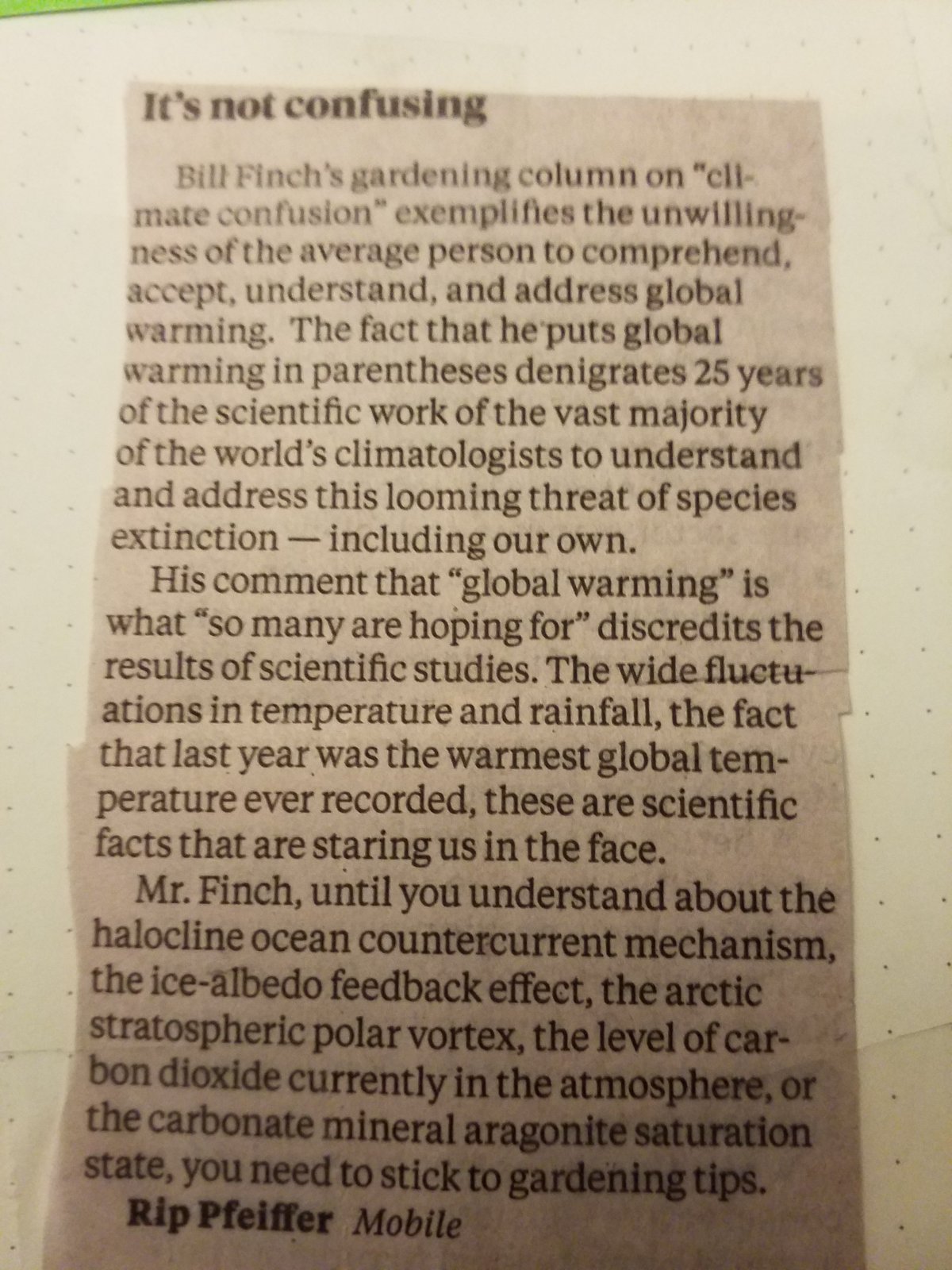
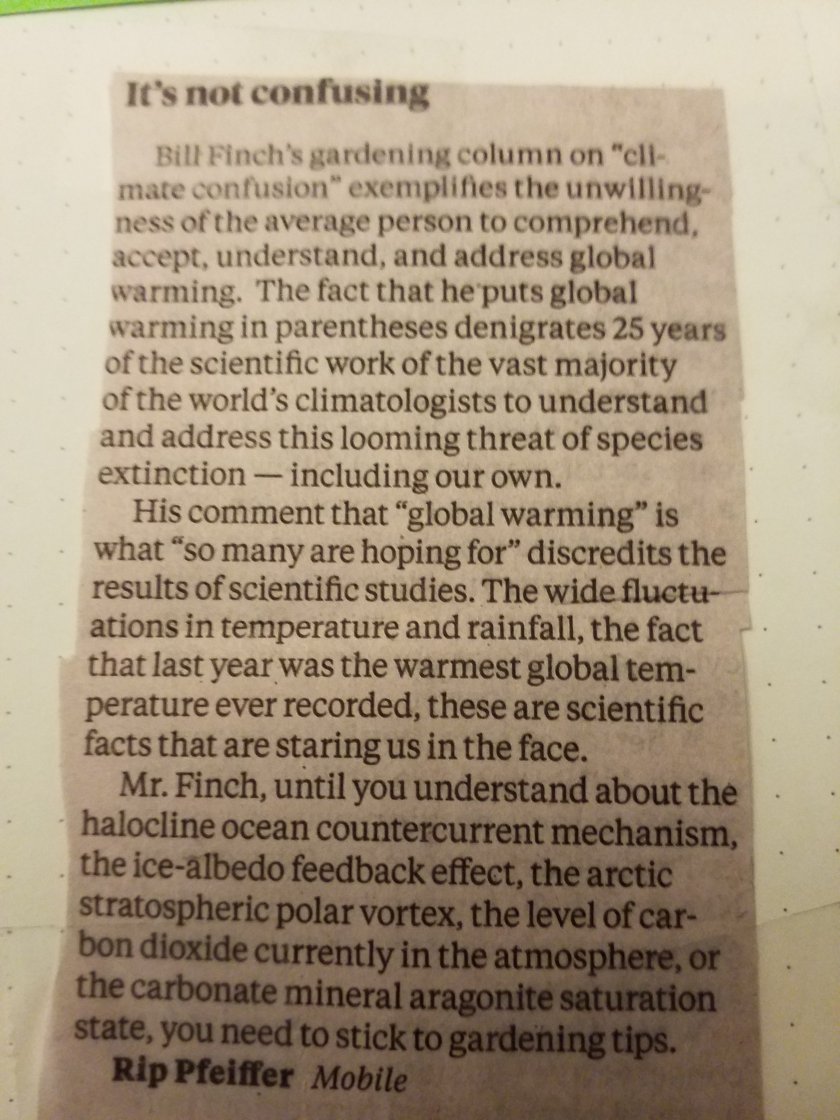
Further clippings from Alabama

Watch “Ike & Tina Turner – Proud Mary | 1971” on YouTube

Do not own rights, just paying mad homage.

Many have done Proud Mary but few compare to this reinterpretation.

Creole delta blues babe!

Thank you lapham’s quarterly (aka you know you’re a redneck…)

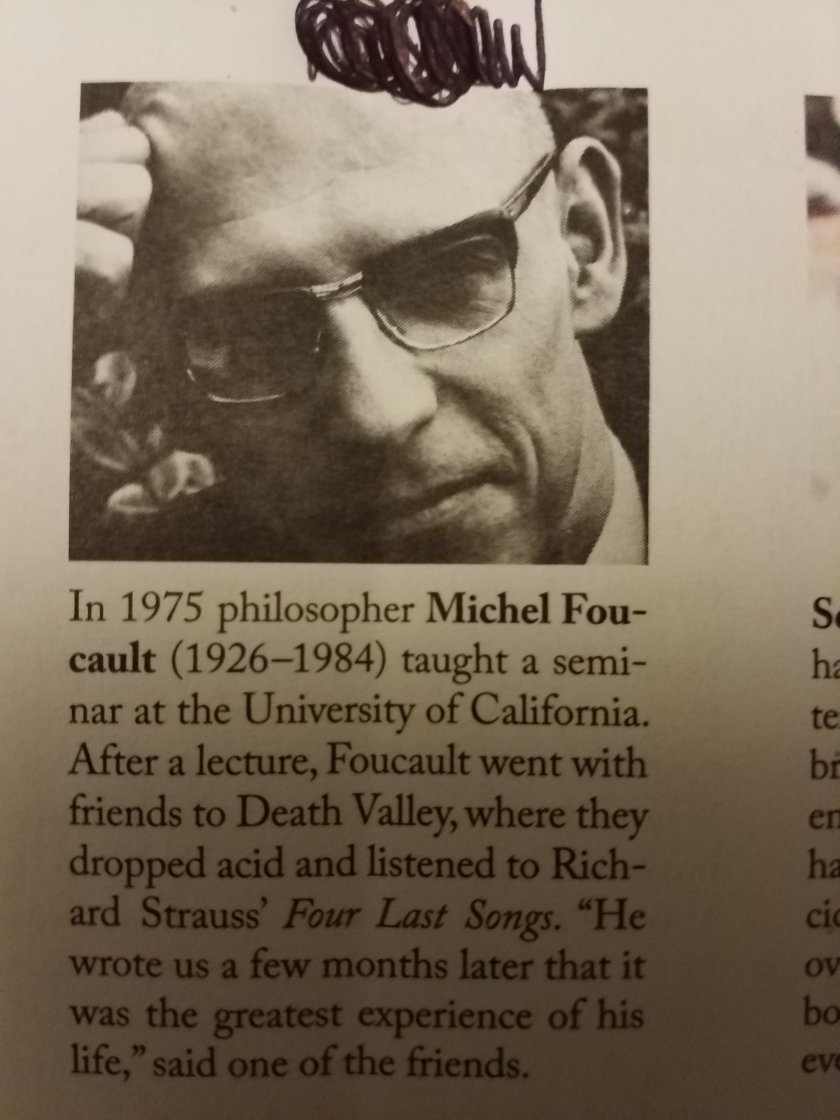
You know you’re a redneck if you’ve been calling Michel Foucault, Michael Foe-cawlt. Tis a pendulum, I suppose. Who knew the below? Not this lady!

Parse & Parser


The word ‘paragon’ entered the cultural consciousness in the 16th Century.

par·a·gon

ˈperəˌɡän/

noun

noun: paragon; plural noun: paragons

  1. a person or thing regarded as a perfect example of a particular quality.

    “it would have taken a paragon of virtue not to feel viciously jealous”

Origin-mid 16th century: from obsolete French, from Italian paragone ‘touchstone used to discriminate good (gold) from bad,’ from medieval Greek parakonē ‘whetstone.’Original Source

Word Introduction

Here is citation info for my sources. We can try to work on our words, but the words work on us too, largely without our awareness. So, here are some words that intrigue me: these are words I want to let ‘work on me.’

Here is citation info for my sources.

We can try to work on our words, but the words work on us too, largely without our awareness.

So, here are some words that intrigue me: these are words I want to let ‘work on me.’

A Quote to Find the Rabbit Hole

“Zeno’s arguments, in some form, have afforded grounds for almost all theories of space and time and infinity which have been constructed from his time to our own.”

Recalled via Boyer, Carl B. The History of the Calculus and its Conceptual Development. New York: Dover Publications, Inc., 1959. Previously published under the title, The Concepts of the Calculus

Mediating Anthropology’s Feuding Factions

The radical cultural relativism popular in contemporary anthropological thought presupposes that cultures are incommensurable* with one another.  On one level, this is true, on a higher level, it is a truism–they are still both ‘cultures.’  Cultures, as considered here, is a fundamental psychological mechanism that is included in the homo sapiens adaptive package.  

This is not a reductionist call to arms.  By reference to biology and physics, we anchor the human experiences to the same weight–we do so with awareness of the western biomedical paradigm which we in the western sciences use to see–we do not do so to reduce the human experiences to the same end or to the sum of their parts, as much as out of respect to those who would be upset were not to acknowledge our own self-awareness (I find this practice tedious and unnecessary, but I am pliable).

cropped-header2.jpg

The elegance of anthropology is not to be found in the creation of axiomatic laws of culture nor can it be found with long-winded diatribes that can appear to be little more than an appeal to authority–not a legitimate data source.  

Its elegance lies in its ability to elucidate the unseen and unseeable veil of the unknown and the unknowable.  It is the notion of experiencing that meta-pattern which is the epi-phenomenon of our actions and thoughts and their innumerable interactions and influences.  “Except in pure mathematics, nothing is known for certain (although much is certainly false).”(Sagan)

To tack the discussion back towards something more tangible, there exists a black and white distinction within the hard sciences in regards to what is scientific and what, conversely, is not scientific: does it meet the standards of the scientific method (is it repeatable, is it measurable?)  Yes or no?

“Science invites us to let the facts in, even when they don’t conform to our preconceptions.”(Sagan, a candle in the dark).


in-couryyard-lookiing-up


Whereas a biologist can confidently announce, ‘yes, this is so’ (assuming proper lab conditions and standards); a social ‘scientist’ cannot.  A social scientist has reservations and restrictions: about the repeatability of the experiment and the repeatability of the experiment’s environment, about phantom variables that may not have been controlled for, about the success of maintaining objectivity during methodology.

The biologist’s evidence is ‘scientific’ by definition and thus the biologist’s conclusions are sure-footed, so to speak (even if they are not directly on the bull’s eye).  The social scientist’s evidence is ‘take my word for it’ or ‘you had to be there’ (i.e. others have no way to verify the data or methodology and thus the social scientist’s conclusions are grasping at straws (even if the analogies appear to be commonsense).  

(1)  Whether the social scientist’s conclusions are correct in the ultimate sense, is not the the concern here.  The concern is the social scientist’s conclusions are intuitions but there is not a whole lot in the way of objective evidence for the social scientist to point at and say ‘see for yourself.’

(2)  The heart of what this blog tries to get at directly reduces to the phenomenon of a priori reasoning.

cedric-servay-133334


Many physicists, especially of the theoretical persuasion, use a priori reasoning and only afterward design and perform an experiment.  But when social scientists, particularly anthropologists, use a priori reasoning they construct a paradigm or viewpoint, a perspective, from which they will watch the experiment as it unfolds.  What they see and what they do not see will be determined by this a priori explanatory paradigmatic scaffolding.  When someone later on questions this constructed meaning-making paradigm, you can point to the experiment; but, what has happened is a self-fulfilling prophecy.  

You decide what “culture” means scientifically, measurably, precisely, and consistently.  To prove this definition you cite the experiment you performed using your personal or externally referenced paradigm of what culture is.  But, your experimental evidence does not confirm or support your paradigm necessarily, it reflects the assumptions you made before you even began experimenting.  You did not really learn anything, you saw what you set out to see.  

I owe some references here and will cite sources shortly.

Carl Sagan

provide that absolute certainty will always elude us

Provide that absolute certainty will always elude us.

Consciousness and Self-Awareness. Informal

Certainly a dog has more self-awareness than do insects.

A dog displays a sense of self during interactions with a dog pack. A hierarchy exists within a pack and every member knows its position. For this to occur, the dog must have an awareness of things existing outside and independent of itself. The dog must also conceptualize its life relative to the lives of other dogs.

A dog adjusts its own behavior in response to the behavior of another dog. The two dogs are working together. They are aware of their own existence and the existence of others.

The rules of the pack hierarchy are tacitly accepted, known, and enforced by all members of the pack. The dogs create something appearing quite similar to a little society-a system of interactions collectively conspiring to create a greater likelihood of survival and reproduction than pack members could expect were they to live alone.

Dogs seem to have selves because cooperation has been/is selected for in the milieus within which dogs exist/ed. A dog does not have the faculty or facility for language, nor does it have an opposable thumb. These are two things possessed by humans alone. These are two things making us unique. Yet still, the self-awareness of dogs seems of a different substance than your, mine and everyone else’s self-awareness.

I assert self-awareness is a condition required of mammals. I assert self-consciousness is a phenomenon separate from consciousness (i need to define consciousness here). I assert that humans are the sole possessors of consciousness but that this is and always has been subject to change. I proclaim self-awareness and its interactions with the reality in which it finds itself produced the conditions under which consciousness could arise. I say human consciousness is the evolutionary product of self-awareness experiencing reality through sensory organs. Further, it was these interactions occurring within the valleys and peaks of a very, particular fitness landscape and that these interactions, over time, created a milieu in which it was advantageous to have a more refined and intuitive awareness of self and the local environment. By advantageous, I mean, a more sophisticated self-awareness created more opportunities for survival until a reproductive age, more opportunities to reproduce at that age, and a better ability to ensure the survival and health of offspring until they grew.

I proclaim that self-awareness enabled society. But it was the complex system of interactions occurring between and among the social structures of a society and the humans whose interactions make up that society, which selected for the phenomenon which we call human consciousness.

Self-awareness led to society and society led to increased and more refined self-awareness. The further interactions of selves and society produced a complex system whose interactions resulted in the two novel epiphenomena we call “culture” and “consciousness.”